 View Sunbury Location
 View Centerburg Location
 View South High Location
Living with dental implant questions is normal, especially if you have missing teeth and are trying to picture what daily life could feel like again. You may wonder whether a replacement tooth will look natural, whether the dental implant procedure will be painful, or whether this choice fits your budget and timeline. At Anthony Dental Care, you are met with patience and clear explanations, so you can take the first step with confidence and without pressure.
When a missing tooth affects your smile, it also impacts everyday routines like chewing, speaking, and feeling comfortable in photos. Tooth loss can quietly affect your oral health over time, including changes in your jawbone and gums. If you are looking for a convenient way to restore function and support long-term stability, dental implants can be a strong tooth replacement option to consider.
Why dental implants are often chosen for missing teeth
A dental implant acts like an artificial tooth root that supports a new artificial tooth. Many people prefer this option because it feels secure like natural teeth, rather than shifting the way removable dentures sometimes can. It is also popular in the United States because it supports confident eating and speaking and can replace a single missing tooth or multiple artificial teeth.
Another reason many patients consider implants is their relationship to bone loss. After tooth loss, your jawbone can change because bone cells respond to the pressure and stimulation that natural teeth normally provide. A well-planned implant placement helps bring back that stimulation at the implant site, supporting the jawbone over time. Your dentist will discuss your goals and options so you can make an informed decision that fits your life.
How do dental implants work?
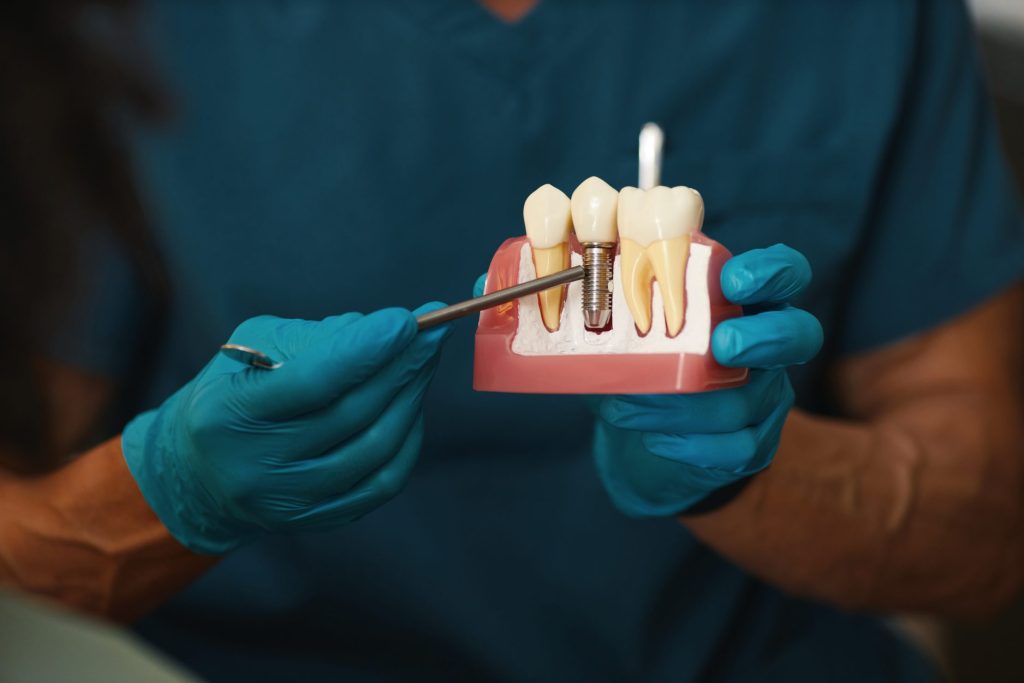
Dental implants work through a process where a small titanium post is placed into the jawbone, and your body gradually bonds to it through osseointegration. A dental implant typically has three main components: the implant itself, an abutment, and a crown. The implant connects to the abutment, and the crown becomes the visible restoration that looks and functions like an artificial tooth.
Your comfort matters throughout the process, and you deserve to understand each phase without feeling overwhelmed. Implant placement is a surgical procedure, but it is planned carefully and explained in plain language. You will also receive guidance on proper care, healing, and what to expect at each stage, so you never feel left guessing.
Dental implant vs dental bridge vs removable dentures
Choosing between tooth replacement options can feel overwhelming, so it helps to compare them in a straightforward way. A dental bridge replaces a missing tooth by relying on neighboring teeth for support, while a denture replaces multiple teeth and may be removable. Dental implants support a replacement tooth from the jawbone, which many patients appreciate for stability and longevity.
Here are a few practical differences people often consider:
- Stability: Implants are anchored in the jawbone, while removable dentures can move during eating or speaking.
- Support for nearby teeth: A dental bridge may involve shaping adjacent teeth, while an implant stands independently.
- Daily routine: A crown on an implant is cared for like other teeth with brushing and floss, while a denture has its own cleaning routine.
- Long-term changes: Tooth loss can contribute to bone loss, and implant support may help maintain the condition of your jawbone.
Your dentist will help you weigh what matters most to you, including comfort, appearance, and how you want your dental routine to feel.
What happens during a dental implant procedure at Anthony Dental Care?
Your consultation is where your questions are welcomed, and your concerns are taken seriously. You will discuss your health history, smile goals, and any anxiety about dental implant surgery. If you have gum disease or periodontal disease, our team will address these first to ensure your gums are healthy enough to support healing.
If implants are a fit, the dental implant procedure is generally planned in steps. While details vary for each person, implant surgery often includes a small incision in the gums, careful implant placement, and closing the area with stitches. Local anesthesia is commonly used to keep you comfortable, and sedation may be discussed if you are nervous or need extra support. If the area needs more support, a bone graft may be recommended to strengthen the implant site before or during placement.
After implant placement, the healing process begins as your jawbone bonds with the implant through osseointegration. Once healing is complete, the abutment and final restoration are placed, such as a crown for a single replacement tooth or a denture supported by implants for a larger area. Throughout the timeline, you can expect clear communication and a calm, supportive environment.
Will you be a good candidate for dental implants?
Many people worry they will not be a good candidate, especially if they have not been to the dentist in a while. You will not be judged here, and you will be treated with respect and kindness as you explore your options. The goal is to understand your oral health, gums, and jawbone condition so your treatment plan is safe and realistic.
A few common factors your dentist will consider include your overall health, the health of your gum tissue, and whether there has been significant bone loss. If you have had periodontal disease or concerns about healing, your team will walk you through supportive steps that may help. In some cases, an oral surgeon may be part of the plan for oral surgery needs, and your care team will explain why and how that supports your outcome.
What does the healing timeline feel like after implant surgery?
Most people want a clear picture of healing, including discomfort, swelling, and what they can eat. After dental implant surgery, it is normal to have some swelling and tenderness, and you may have instructions for gentle cleaning and soft foods. Your dentist will also help you understand signs to watch for and how to protect the implant site while it heals.
The timeline can vary depending on whether you need a bone graft, how many implants you receive, and your personal healing. During follow-up visits, your team checks stability and gum health while the jawbone continues the work of osseointegration. If you ever feel anxious about complications, you can bring those concerns up openly, because you deserve to feel safe and supported at every visit.
Caring for implants: keeping your new tooth replacement strong
Dental implants are designed for durability, and daily habits still matter for the long run. Caring for implants looks a lot like caring for natural teeth: brushing, flossing, and keeping up with regular dental hygiene visits. Proper care also supports your gums and helps reduce the risk of gum disease around the implant.
Your care plan may include tips for cleaning around the crown and gum tissue, plus guidance on tools that make flossing easier. If you have jaw pain or teeth grinding, tell your dentist, because bite forces can affect comfort and longevity. If you ever have questions about a possible allergic reaction to materials, including titanium, bring it up during your consultation so your team can address it thoughtfully.
Single-tooth and full-arch options, including All-on-4 Dental Implant
Dental implants can support many types of smiles, from one missing tooth to a full-arch restoration. For a single tooth replacement, an implant with an abutment and crown can blend naturally with your other teeth. For patients missing many teeth, implant-supported options can secure artificial teeth in a stable way.
Anthony Dental Care also offers All-on-4 Dental Implant, a full-arch approach that uses strategically placed implants to support a fixed set of teeth. If you are currently wearing removable dentures and want a more secure feel, this conversation may be worth having. Your dentist will help you compare options based on comfort, function, and your goals for quality of life.
A steady, judgment-free next step in Central Ohio
If you live near Centerburg, Sunbury, or the South High area, you deserve dental care that feels calm, personal, and respectful. At Anthony Dental Care, dentistry is practiced as a calling, and you are treated like family from the start. You will get clear answers about dental implants, implant surgery, costs to expect, and whether other services like Crowns, Fillings, Root Canals, Bridges, or Tooth Extractions should be addressed first.
If you are ready to explore a replacement tooth option that supports long-term stability, schedule a consultation with Anthony Dental Care. We will listen to your story, explain your dental implant placement plan in a way that makes sense, and take the next step together at a pace that feels comfortable.